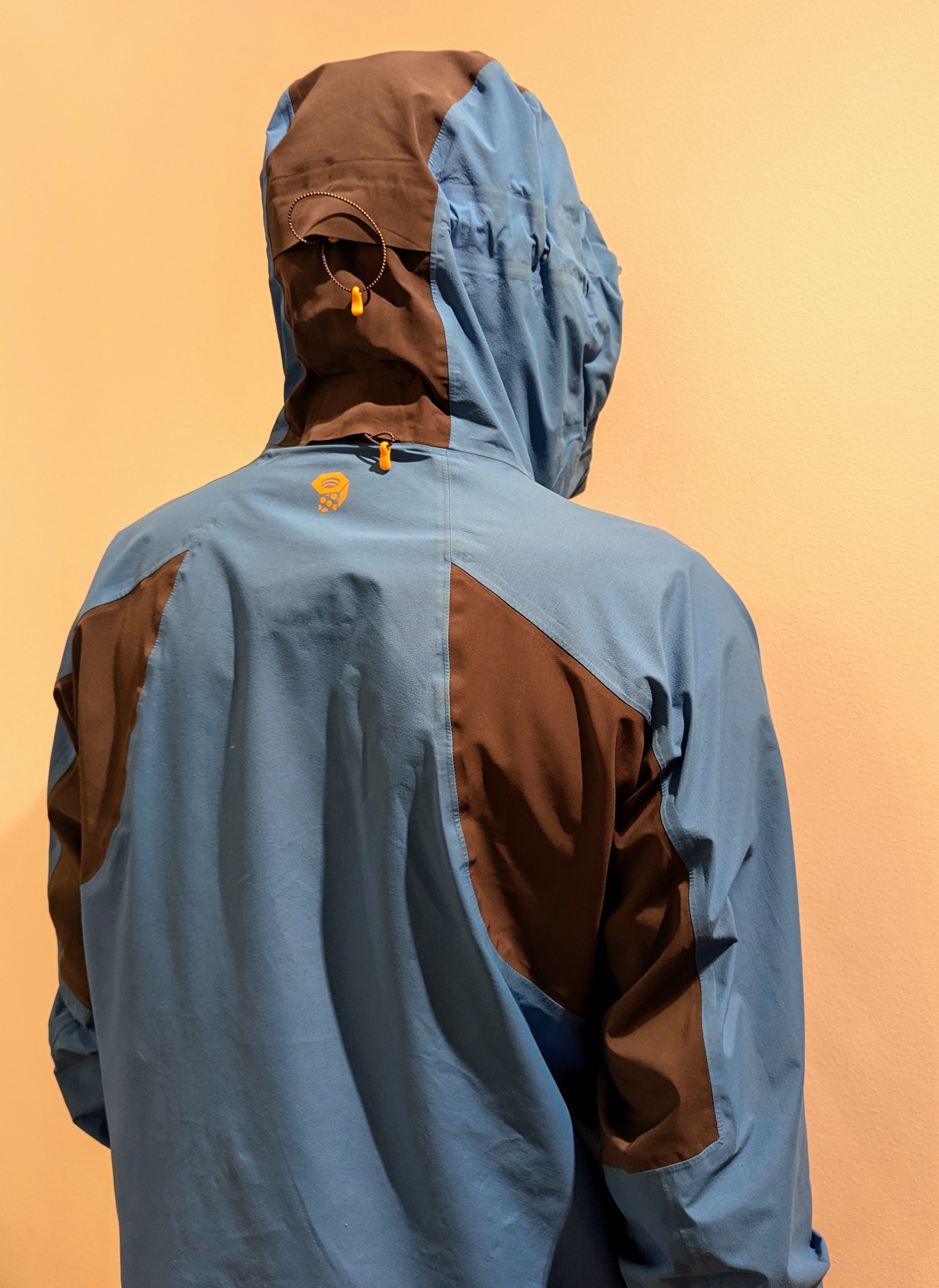


Main, blue textile
The blue textile is 100% nylon, and it is a laminate of an inner, grey knit, a white membrane/adhesive layer, and the blue, outer woven.


The adhesion in this laminate stack failed in two areas:

The hem, possibly due to abrasion. See area of chatoyance on the far left.

The collar area after exposure to skin oils. After the delamination, the knit has been snagged – leaving dark streaks.
Dark grey stretch panels
The grey panels are designed for stretch and breathability. They are labeled 85% nylon and 15% elastane. These are also a laminate of an inner knit, white membrane/adhesive, and a stretch woven.


Conclusions
This jacket shows membrane/adhesive lamination failure in two main areas: massive failure where skin oils regularly transfer onto the inner fabric, and smaller areas of failure at the hem.
Regular washing potentially could have extended the time-to-failure in the collar area, but a different design might also help. As a design change, we recommend using a denser knit or possibly a woven as the inner fabric in the collar, to inhibit skin oil transfer through the inner knit fabric onto the membrane/adhesive.
The existing jacket design shows a remarkable economy of articles of textile. This could have been motivated by either cost concern or sustainability considerations. If using a third main fabric would not fit within the cost and sustainability budget, then we would recommend making the collar area out of the dark grey stretch panel material – its inner knit is denser, and it showed lower delamination in the collar relative to the blue material.
One response to “Materials Analysis – Technical Rain Coat”
[…] dad and I took a close look at his stalwart raincoat to figure out its ingredients. To our dismay, we found that the collar area is massively […]